


Baking soda has become a common addition to produce-washing routines, but putting every piece of fruit into the same solution can cause problems. Apples and pears can handle a baking soda wash. Soft berries need a different approach.
The difference comes down to the fruit's surface and how it responds to handling and soaking. Baking soda is an alkaline salt with mild abrasive action, which can help clean produce with firm, smooth skins. Delicate fruit can bruise, soften, or break down when treated the same way.
Baking soda also isn't a sanitizer. For much of the fruit in your kitchen, cold running water and some gentle rubbing are enough before eating or cooking.
Save the Baking Soda for Firm-Skinned Fruit
Apples, pears, and grapes are better candidates for a baking soda wash because their skins can withstand more handling. A mixture of about one teaspoon of baking soda per quart of water can be used to wash the surface.
Rinse the fruit under cold running water afterward to remove the baking soda along with loosened dirt and debris.
There is another reason baking soda gets attention for produce. Research has found that it can help remove residues from some pesticides on the surface of certain fruit. That doesn't mean every pesticide responds the same way or that every piece of produce needs a baking soda bath.
Berries Need a Gentler Wash
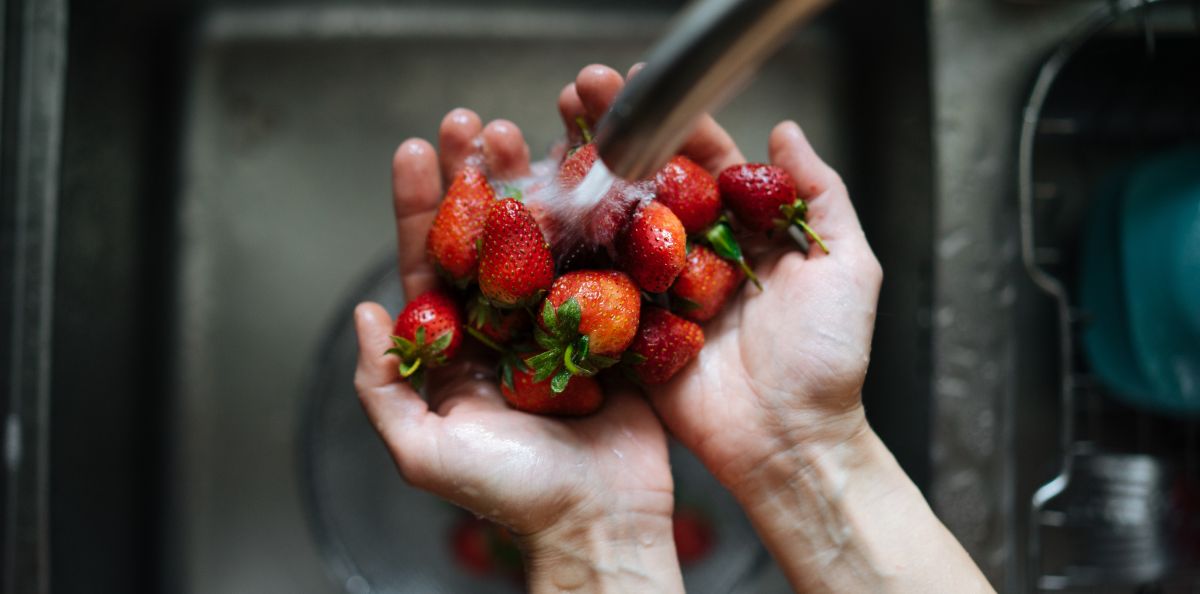
Blackberries, raspberries, strawberries, and other soft fruit don't have the same protective exterior as an apple. Their surfaces can bruise and hold water, and extended soaking can affect their texture.
Cold running water is the better approach. Rinse the berries without leaving them submerged for a long period, then drain them well.
Wash berries close to when you plan to eat them rather than putting wet fruit back into storage. Added moisture can speed up deterioration.
Don’t Leave Apples Soaking in the Bowl
Even firm fruit shouldn't remain in a baking soda solution without a time limit. Extended soaking can begin to affect an apple's texture and quality.
Water temperature matters too. Stick with cold water rather than soaking fruit in warm water. Temperature differences can affect the fruit's tissues and encourage water to move through the surface.
A short wash followed by a thorough cold-water rinse is enough. More time in the bowl doesn't mean cleaner fruit.
Soap and Bleach Don’t Belong on Produce
Dish soap may seem like a stronger cleaning option, but fruit isn't a countertop or dinner plate. Produce can retain residues from products that were never intended for washing food.
Bleach shouldn't be used to wash fruit either. Cleaning produce does not require turning the kitchen sink into a sanitizing station.
For many fruits, the simplest method remains the one that requires no extra ingredient: hold the fruit under cold running water, rub firm surfaces where appropriate, and dry or drain it before eating. Baking soda can have a place in that routine, but the berry container isn't it.
Leave a Reply