


Dish soap, baking soda, vinegar, salt, and leftover lemons handled many kitchen cleaning jobs before a separate product existed for each surface. These staples can still remove grease, tackle odors, scrub cutting boards, and restore tarnished cookware.
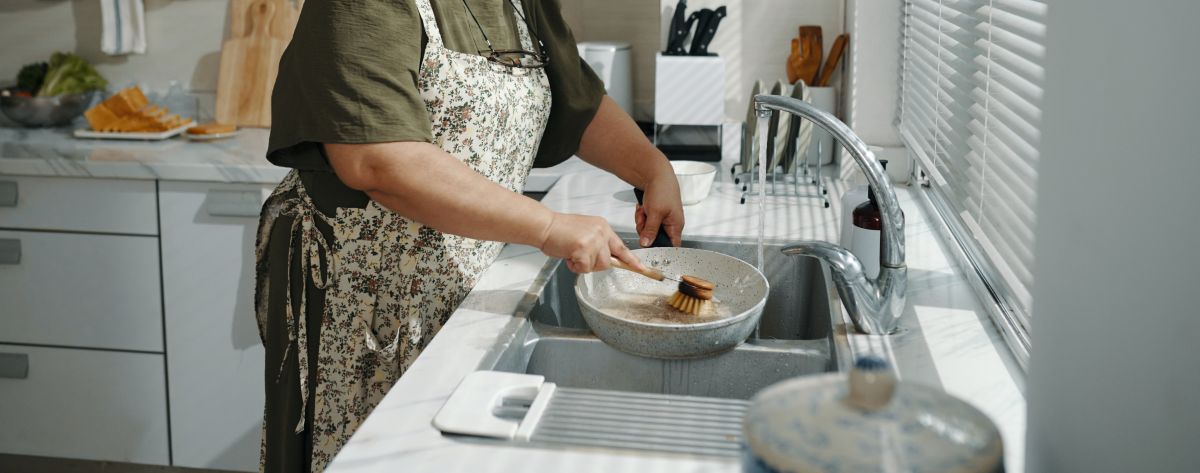
The key is matching each ingredient to the right material. Vinegar works on some surfaces but can damage natural stone, while lemon and salt have specific uses on wood and uncoated copper.
Scrub Wooden Cutting Boards With Lemon and Salt
Sprinkle coarse salt across a wooden cutting board and scrub it with the cut side of half a lemon. The salt helps lift residue from the surface, while lemon juice helps tackle food odors left by ingredients such as garlic and onions.
Rinse the board after scrubbing and let it dry. For boards used with raw meat, lemon and salt don't replace washing with dish soap and water.
Use a Squeezed Lemon on Copper
Before throwing away a squeezed lemon, dip the cut side in coarse salt and rub it across tarnished, uncoated copper cookware.
The lemon's acid and the abrasive salt help lift tarnish. Rinse the copper and dry it after cleaning to prevent water marks. Avoid this method on lacquered or coated copper.
Put Baking Soda to Work on Kitchen Odors
An open container of baking soda can help absorb odors in the refrigerator. The same box can also tackle some cooked-on food residue.
Add enough water to baking soda to form a paste, apply it to suitable cookware or surfaces, and scrub before rinsing. Avoid using it on finishes that can scratch.
Use Dish Soap Beyond the Dinner Plates
Dish soap cuts cooking grease, so it can also handle greasy residue around the stove, backsplash, counters, and other washable kitchen surfaces.
Add a small amount to warm water rather than coating the surface with concentrated soap. Wipe away the grease, then go over the area with a clean damp cloth to remove the remaining soap.
Clean Glass With Diluted Vinegar
Combine two parts water with one part white vinegar for a basic glass-cleaning mixture. Spray it onto windows or other acid-safe glass surfaces and wipe with a lint-free cloth.
Keep vinegar away from marble, limestone, travertine, and other acid-sensitive stone. Acid can etch the surface rather than clean it.
Use Baking Soda on Sink Odors
Baking soda can also help with odors around the kitchen sink. Sprinkle some into the sink, add enough water to create a paste, and scrub suitable surfaces before rinsing.
It provides mild abrasion without requiring another bottle under the sink, though abrasive cleaners should be avoided on materials prone to scratching.
Keep Salt for More Than Cooking
Coarse salt works as a scrub because its crystals add abrasion. Beyond cutting boards and copper, it can help loosen food residue from some durable cookware when paired with a little water.
Salt can scratch polished or delicate finishes, so reserve it for materials that can tolerate scrubbing.
Five pantry and sink staples cover a surprising number of kitchen jobs: dish soap for grease, baking soda for odors and residue, lemon and salt for targeted scrubbing, and vinegar for acid-safe glass and surfaces.
Leave a Reply