


Most lemon loaves spend their time inside an oven. Batter goes into a loaf pan, heat rises from every side, and baking takes care of the rest. This cranberry lemon loaf follows a different path. Instead of baking in the oven, the entire loaf cooks inside a pressure cooker, producing a soft texture, bright lemon flavor, and a result that looks surprisingly close to a traditional bakery-style pound cake.
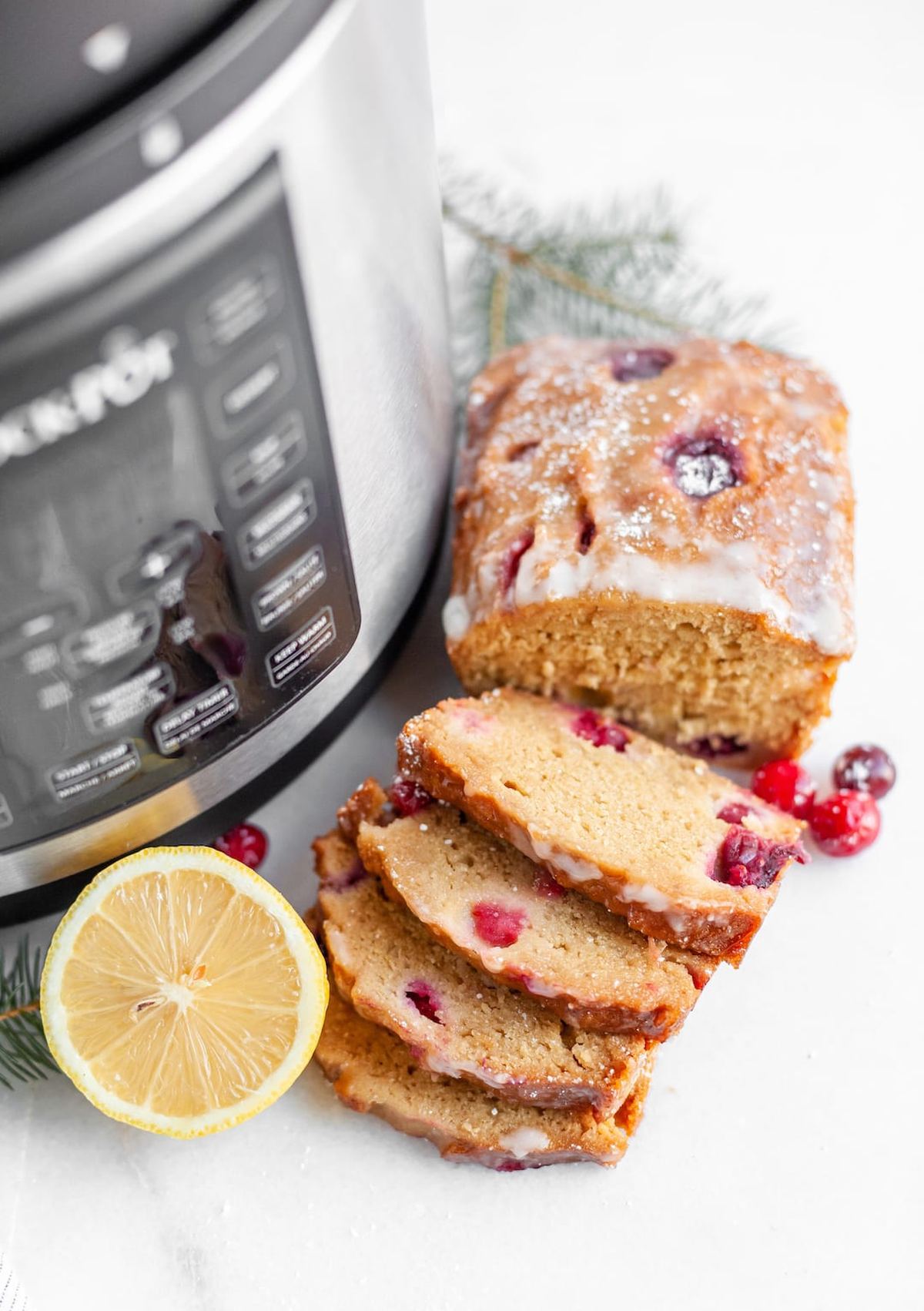
Pressure cookers have become known for soups, stews, beans, and weeknight dinners. Cakes and sweet loaves rarely come to mind. That unexpected cooking method is what makes this recipe stand out.
A Pressure Cooker Replaces the Oven
Most quick breads rely on dry heat. This recipe uses steam and pressure instead.
The batter goes into a loaf pan, which sits on a trivet above water inside the pressure cooker. As pressure builds, heat surrounds the pan and cooks the loaf without exposing it to direct oven heat.
That environment helps prevent the loaf from drying out while creating a texture that stays soft from the center to the edges.
Lemon Does Most of the Heavy Lifting
Many lemon loaf recipes depend on extracts or artificial flavorings. This version gets its flavor from fresh lemons.
Lemon juice and lemon zest both go into the batter, creating a bright citrus flavor that carries throughout the loaf. A simple lemon glaze on top adds another layer of citrus without overwhelming the cake.
Every slice delivers lemon flavor instead of relying on sweetness alone.
Cranberries Change the Balance
Without cranberries, this would be a classic lemon loaf.
Frozen cranberries introduce bursts of tart flavor that cut through the sweetness and create contrast in every bite. Their sharp flavor pairs naturally with citrus, making the loaf taste more balanced and less sugary than many bakery versions.
Small pockets of cranberry also add color and texture across the finished loaf.
Several Flours Work Together
Traditional pound cakes often rely on all-purpose flour for structure. This recipe takes a different approach.
Coconut flour, gluten-free flour, and tapioca flour each contribute something different. Coconut flour helps absorb moisture, tapioca adds tenderness, and the gluten-free flour provides structure.
The combination creates a loaf that remains soft without requiring wheat flour or dairy products.
The Glaze Finishes the Loaf
Once cooled, the loaf gets topped with a simple lemon glaze made from powdered sugar, lemon juice, and almond milk.
The glaze settles across the top, adding sweetness and an extra layer of citrus flavor. It also creates the bakery-style finish many people expect from a lemon loaf.
Without it, the loaf tastes more like breakfast bread. With it, the loaf moves closer to dessert.
A Different Way to Make a Familiar Loaf
Most lemon loaf recipes look almost identical. Mix the batter, bake in the oven, cool, and glaze.
This version changes one major step without changing what people enjoy about lemon loaf. Fresh lemon, tart cranberries, and a soft cake-like texture remain. The difference comes from where the loaf gets cooked.
For anyone with a pressure cooker sitting on the counter, this recipe offers proof that the appliance can do far more than dinner. A moist cranberry lemon loaf might be one of the last things people expect to pull out of it.
Leave a Reply