


Cornmeal gives Southern fried catfish its coarse, crisp coating, but the breading cannot do the job on its own. The temperature of the oil, the number of fillets in the pan, and what happens after frying all affect whether that coating stays crisp or absorbs excess oil.
A buttermilk dip followed by cornmeal, flour, and seasoning builds the crust before each fillet enters oil heated to 350 to 375 degrees Fahrenheit. Keeping the oil within that range helps the coating set as the fish cooks, while frying a few fillets at a time prevents a sharp temperature drop.
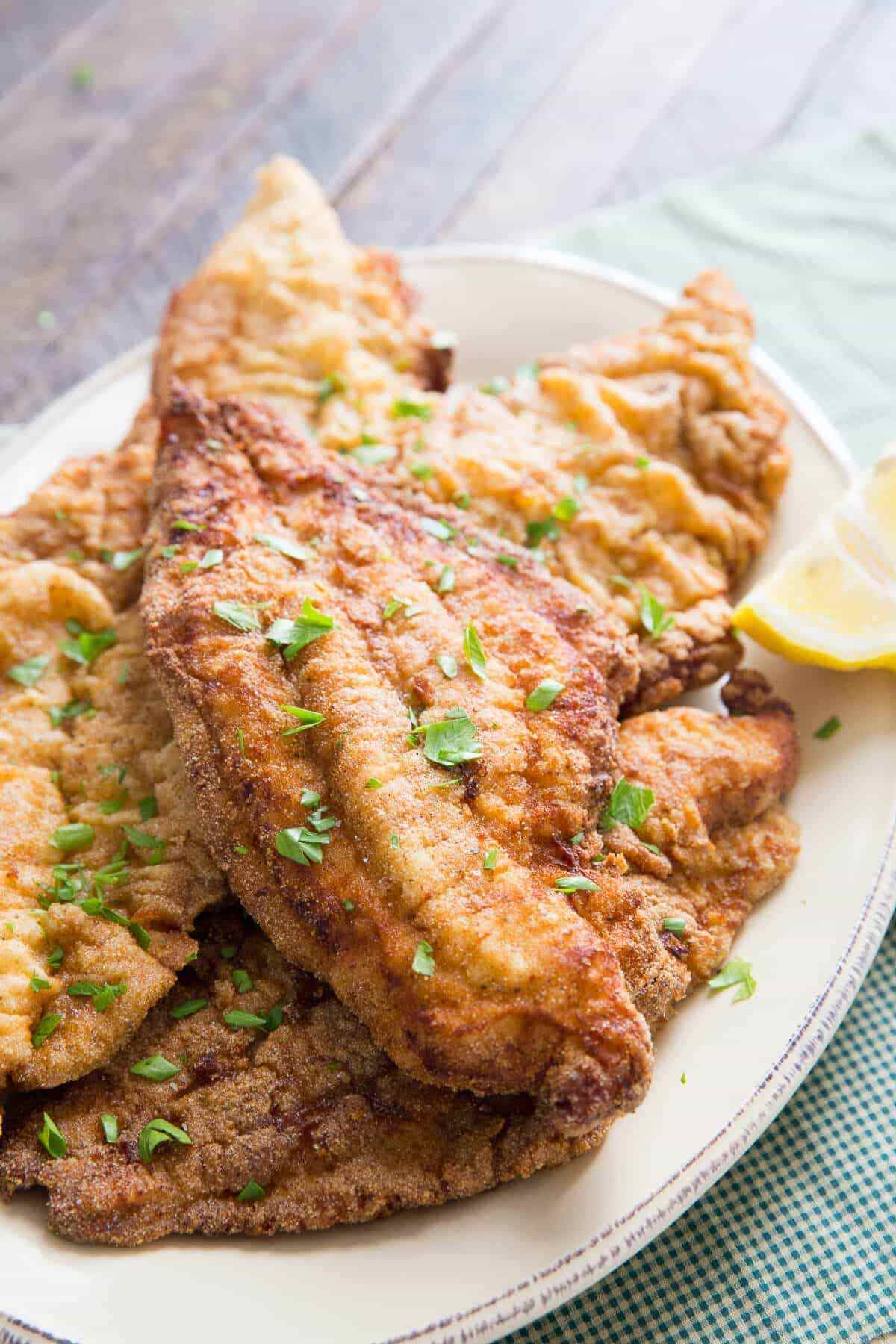
The result pairs a crisp cornmeal exterior with tender fish inside, without depending on a thick batter for the crunch.
Cornmeal Gives Catfish Its Coarse Crust
Southern fried catfish often uses cornmeal as the main part of the coating rather than flour alone. In this version, cornmeal combines with all-purpose flour and Old Bay seasoning to create the dry mixture that covers each fillet.
Cornmeal brings a coarse texture to the surface, while flour helps fill the spaces between the larger grains. Garlic powder, onion powder, or dried parsley can join the mixture when more seasoning is wanted, but the cornmeal remains responsible for much of the texture.
Buttermilk Helps the Coating Stay on the Fish
Before reaching the cornmeal mixture, each catfish fillet goes into buttermilk. The wet surface gives the dry ingredients something to grip, creating an even coating before the fish enters the oil.
No buttermilk in the refrigerator does not require abandoning the method. Adding a tablespoon of vinegar or lemon juice to regular milk, then letting the mixture sit for about 10 minutes, creates a substitute that can fill the same role in the coating process.
Oil Temperature Changes the Result
The oil should reach 350 to 375 degrees Fahrenheit before the first fillet goes into the pan. Starting with oil below that range gives the coating more time to absorb oil before the exterior sets.
A cooking thermometer removes the guesswork from this step. Once the oil reaches the target range, each fillet cooks for about four to five minutes on the first side before being turned and fried until the second side reaches a golden color.
Too Many Fillets Cool the Oil
Putting several pieces of fish into the skillet at once changes the temperature of the oil. Each fillet brings cooler mass into the pan, so adding too many at the same time can pull the oil below the range needed for frying.
Cooking the catfish in small batches gives the oil a chance to recover between additions. That keeps the conditions more consistent from the first fillet to the last instead of extending the cooking time for an overcrowded batch.
The Crunch Still Needs Attention After Frying
Catfish does not stop interacting with oil when it leaves the skillet. Excess oil remains on the surface, so the fillets need a place to drain before serving.
Paper towels can absorb that oil, while a wire rack set over a baking sheet keeps the fish raised above anything that drips away. The coating gets a chance to stay crisp instead of resting in oil collected beneath the fillet.
Cornmeal may build the crust people associate with Southern fried catfish, but the crunch depends on the entire frying process. Buttermilk prepares the surface, hot oil sets the coating, small batches protect the temperature, and draining finishes the job once the fish comes out of the pan.
Leave a Reply