


Raw chicken comes out of the package wet, so rinsing it under the faucet can feel like one more cleaning step before cooking. I used to understand the logic: wash off what I don't want, then move the chicken to the pan.
The USDA's research on washing raw poultry gave me a different reason to keep chicken away from the faucet. The problem isn't that water fails to make the chicken look cleaner. It's what contaminated water can carry into the rest of the kitchen.
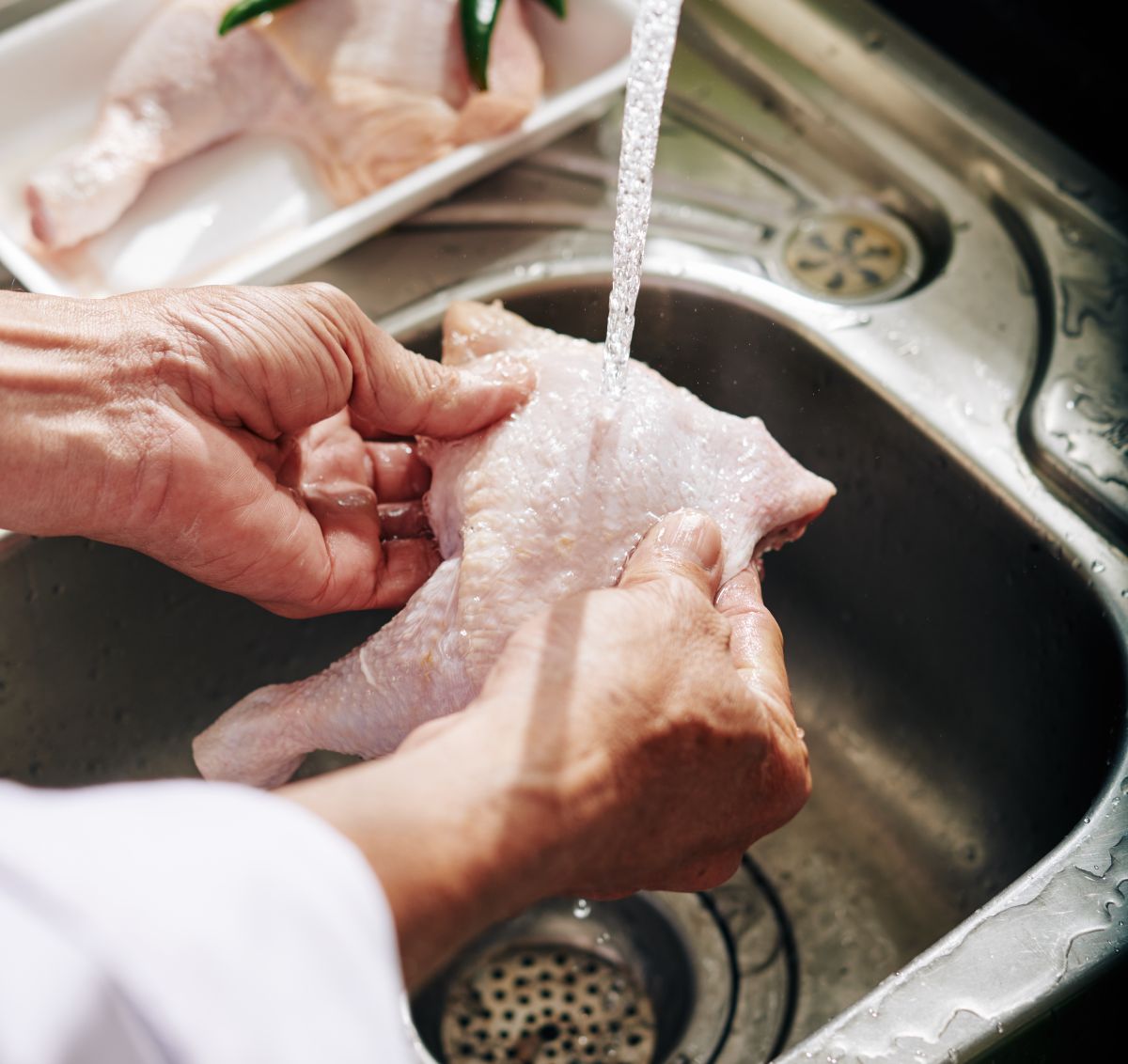
The Sink Was What Changed My Mind
USDA researchers observed people preparing raw poultry and a salad in a test kitchen.
Among participants who washed their poultry, 60% had bacteria in the sink afterward. Cleaning the sink didn't erase the problem in every case: 14% still had bacteria in the sink after attempting to clean it.
More concerning, 26% transferred bacteria from the raw poultry to lettuce prepared for the meal.
The rinse had created another route for contamination instead of making dinner safer.
Water Isn't What Makes Raw Chicken Safe
Running chicken under the faucet doesn't replace the step that kills harmful germs: cooking.
FoodSafety.gov says raw poultry can carry bacteria such as Salmonella and Campylobacter and tells home cooks not to wash it. Chicken should reach an internal temperature of 165°F, checked with a food thermometer.
That changed how I think about what "clean" means when I'm handling raw chicken. The goal isn't to wash bacteria from the surface. It's to keep raw poultry and its juices contained until heat does the job.
I Keep Raw Chicken Away From the Faucet
FoodSafety.gov goes beyond chicken. Its kitchen-cleaning guidance says not to wash meat, poultry, eggs, or seafood, because doing so can spread harmful germs around the kitchen.
Instead, raw foods should stay separate from ingredients that won't be cooked. Cutting boards, dishes, utensils, and counters that touch raw meat need hot, soapy water afterward. Hands need soap and running water for at least 20 seconds.
In other words, I wash what touched the chicken—not the chicken itself.
I Don't Rely on Color to Tell Me It's Done
Skipping the rinse puts more attention on the part that matters: temperature.
FoodSafety.gov lists 165°F for poultry, including ground chicken and turkey. Whole cuts of beef, pork, lamb, and veal have different temperature guidance, while ground beef, pork, veal, and lamb should reach 160°F.
A thermometer gives me information the sink can't.
Produce Still Goes Under Running Water
Not washing raw chicken doesn't mean I've stopped washing food.
Fresh fruits and vegetables should be rinsed under running water. FoodSafety.gov says not to use soap, bleach, or commercial produce wash. Produce marked "pre-washed" doesn't need another rinse.
That creates a simple split in my kitchen. Produce gets the faucet. Raw chicken doesn't.
I once saw rinsing as an extra precaution before cooking poultry. USDA's findings made the downside much more concrete: bacteria didn't have to stay on the chicken. Washing gave contaminated droplets and juices another chance to reach the sink and food nearby.
Now the chicken goes from its package to preparation without a rinse, and I save the washing for my hands, utensils, cutting board, and work surface.
Do you rinse raw chicken before cooking it, or keep it away from the sink?
Leave a Reply