


Removing the membrane from pork ribs can mean working a knife under one edge, getting enough of it loose to grab, then pulling the slippery sheet away from the bones. I don't always take it off anymore.
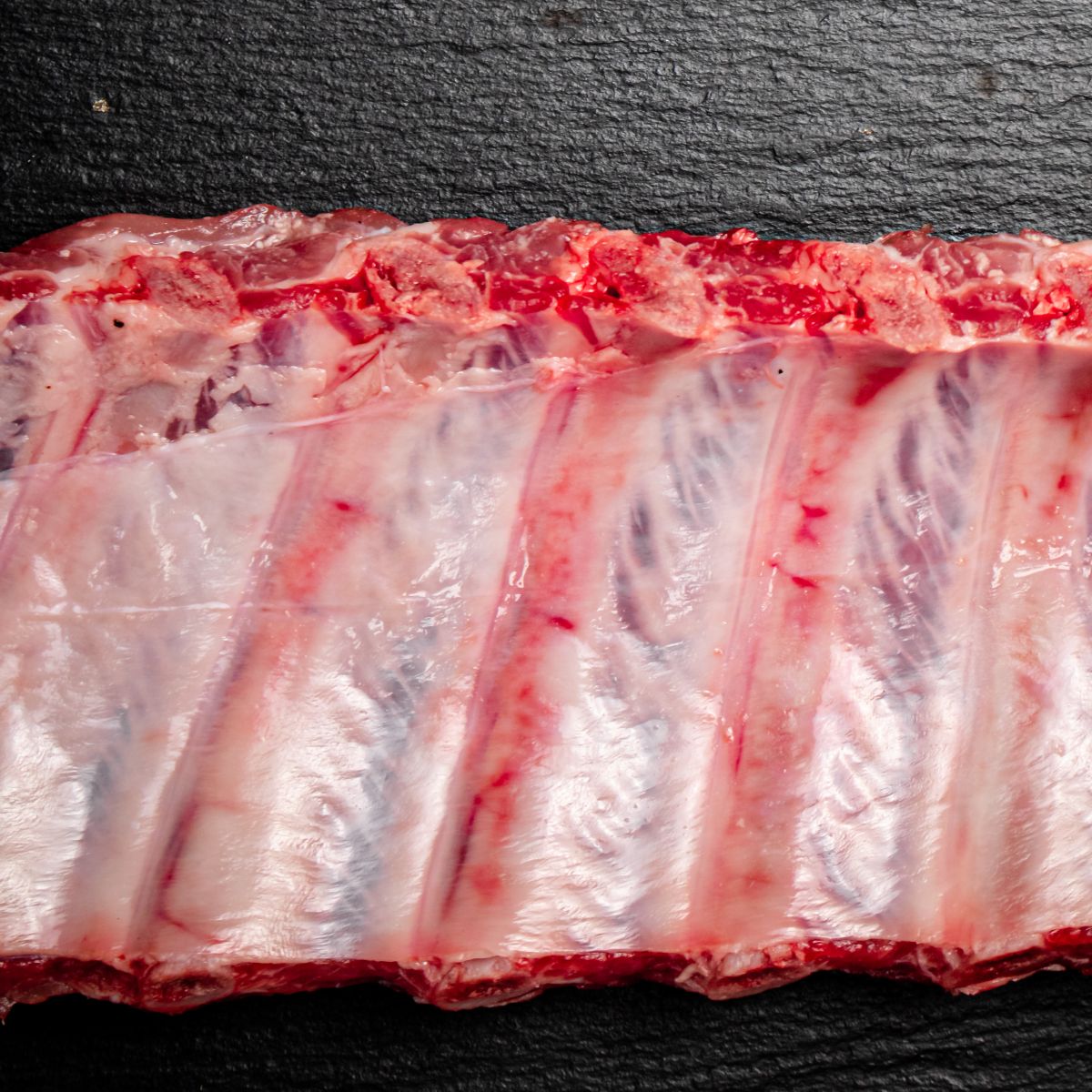
Instead, I leave the membrane attached and score it with a sharp knife. Cutting a crosshatch pattern across the surface gives me a middle ground between peeling the whole thing off and leaving it untouched.
I Leave the Membrane on the Bone Side
Turn a rack of pork ribs over and you'll find a thin membrane covering the bony side.
It's sometimes called silverskin because of its sheen. Unlike the meat and fat around it, the membrane doesn't disappear during cooking.
Removing it before cooking is one option, but it isn't the only one.
I Score It in a Crosshatch Pattern
Instead of trying to pull the membrane off in one piece, I use a sharp knife to score across it.
Make shallow cuts in one direction, then cross them with cuts running the other way. The goal is to cut the membrane into a crosshatch pattern without cutting deep into the meat underneath.
The membrane stays attached when the ribs go into the oven or onto the grill.
The Membrane Retracts as the Ribs Cook
Scoring changes what happens to the membrane under heat.
According to the source, the membrane renders some and retracts over the bones during cooking. Breaking up the surface with those cuts can make its chew less noticeable when the ribs are ready to eat.
It doesn't mean the membrane melts away. Some of it remains on the finished ribs.
Pulling It Off Still Has an Advantage
There are reasons many barbecue cooks remove the membrane instead.
To remove it, work a butter knife or metal spoon between a bone and the membrane. Once enough comes loose to grip, pull the sheet away from the rack.
The source notes that barbecue competition cooks tend to remove it so marinade and smoke can reach the meat without that layer in the way. A cooked membrane can also add a chewy texture that competition judges may notice.
So scoring isn't meant to prove that removing the membrane is wrong. It gives me another option when I don't want to fight with a slippery sheet before dinner.
I Can Remove What's Left While Eating
Leaving the membrane on before cooking doesn't mean I have to eat every piece of it.
If the remaining texture bothers me once the ribs are cooked, the source suggests pulling it away while eating. At that point, I haven't spent prep time trying to remove an intact membrane from the entire raw rack.
That's why I started scoring instead of peeling. The membrane stays on, but I don't leave it untouched. A few crosshatch cuts give it a chance to retract during cooking without turning rib prep into a tug-of-war.
Would you score the membrane on pork ribs, or pull the whole thing off before cooking?
Leave a Reply