


Pizza toppings rarely change. Pepperoni, sausage, mushrooms, onions, and peppers continue to dominate delivery menus, but homemade pizzas have opened the door to combinations that almost never appear at traditional pizzerias. One topping has moved from burger plates and deli sandwiches onto pizza crust, creating a combination that continues to divide people until the first bite.
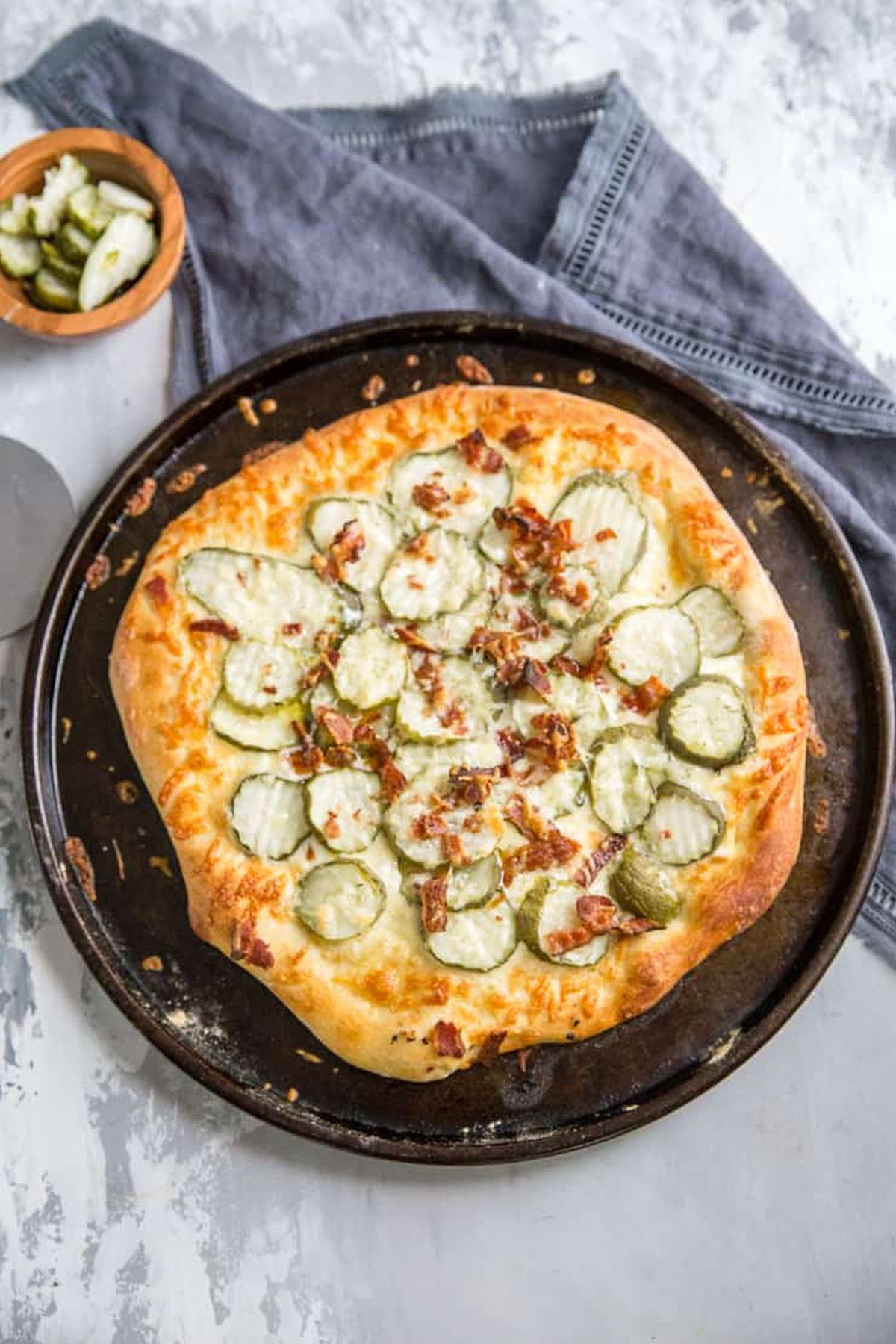
Dill pickles bring crunch, acidity, and sharp flavor that cut through melted cheese instead of blending into it. Combined with bacon, garlic, creamy cheeses, and fresh dill, pickle pizza delivers the same balance that makes cheeseburgers, Cuban sandwiches, and loaded burgers work so well. That contrast explains why more home cooks have started adding pickle slices to pizza instead of treating them as a side.
Dill Pickles Cut Through Rich Cheese
Most pizzas depend on tomato sauce to balance cheese.
Pickle pizza skips red sauce and allows acidity to come from dill pickles instead. Vinegar cuts through Monterey Jack, mozzarella, or Havarti, preventing each bite from becoming too rich.
Thicker deli-style pickle slices also retain their texture during baking instead of disappearing beneath the cheese.
Garlic And Olive Oil Replace Tomato Sauce
Removing tomato sauce changes the entire pizza.
Olive oil brushed across the dough creates a crisp base while minced garlic seasons every slice before the cheese goes on. Without tomato sauce competing for attention, the pickles remain the dominant flavor instead of becoming another topping buried beneath acidity.
The result resembles white pizza more than traditional pizza.
Bacon Completes The Flavor Balance
Pickles bring acidity. Cheese adds richness.
Bacon fills the remaining gap with smoky, salty flavor that complements both ingredients. Crisp bacon crumbles distribute across the pizza, allowing every slice to contain all three components instead of concentrating meat in one section.
Ham, pancetta, or soppressata can produce a similar balance, but bacon remains the most common pairing.
Dill Extends The Pickle Flavor
Fresh dill does more than garnish the finished pizza.
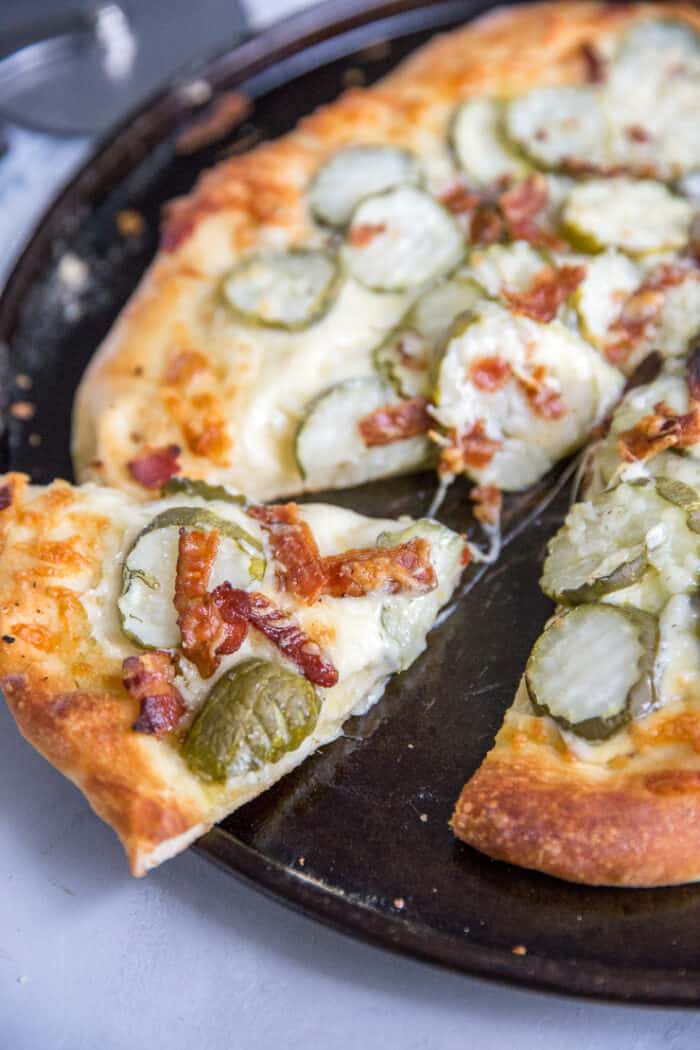
Scattered across the hot cheese after baking, the herb reinforces the flavor already present inside the pickles while adding freshness that cooked herbs cannot provide. Even a small amount changes the aroma before the first bite.
That final addition separates pickle pizza from standard white pizza with vegetables.
Thick Pickle Slices Hold Up Better In The Oven
Not every pickle works on pizza.
Thin sandwich slices release moisture quickly and often soften during baking. Deli-cut dill pickles stay firmer, maintain more crunch, and create distinct bites across the pizza.
That extra thickness also prevents the pickles from disappearing beneath the cheese, allowing their texture to remain part of the finished pizza.
Homemade Pizza Encourages More Experimentation
Delivery menus often repeat the same topping combinations.
Making pizza at home gives cooks room to test ingredients that rarely appear at restaurants. Pickles, hot honey, whipped ricotta, roasted vegetables, fermented toppings, and regional cheeses have all become more common as homemade pizza continues to evolve beyond pepperoni.
Pickle pizza reflects that shift. Instead of copying a restaurant favorite, it turns familiar sandwich ingredients into a combination that surprises people before becoming one they want to make again.
Leave a Reply