


Breakfast casseroles have long relied on milk, cream, and cheese for richness, but more recipes now achieve the same texture with a different ingredient. Coconut milk creates a soft, fluffy egg mixture without dairy while allowing vegetables, herbs, and potatoes to remain the focus.

The substitution works for more than dairy-free cooking. Coconut milk blends into the eggs, creating a casserole that stays moist after baking while pairing with ingredients that already belong in a classic breakfast casserole.
Coconut Milk Keeps Eggs Tender
The egg mixture determines the finished texture.
Whisking eggs with coconut milk creates a rich custard that bakes into soft, tender layers instead of dry slices. The coconut flavor remains subtle, allowing herbs and vegetables to dominate the finished casserole.
Roasted Potatoes Create A Better Base
Potatoes cook before the eggs enter the baking dish.
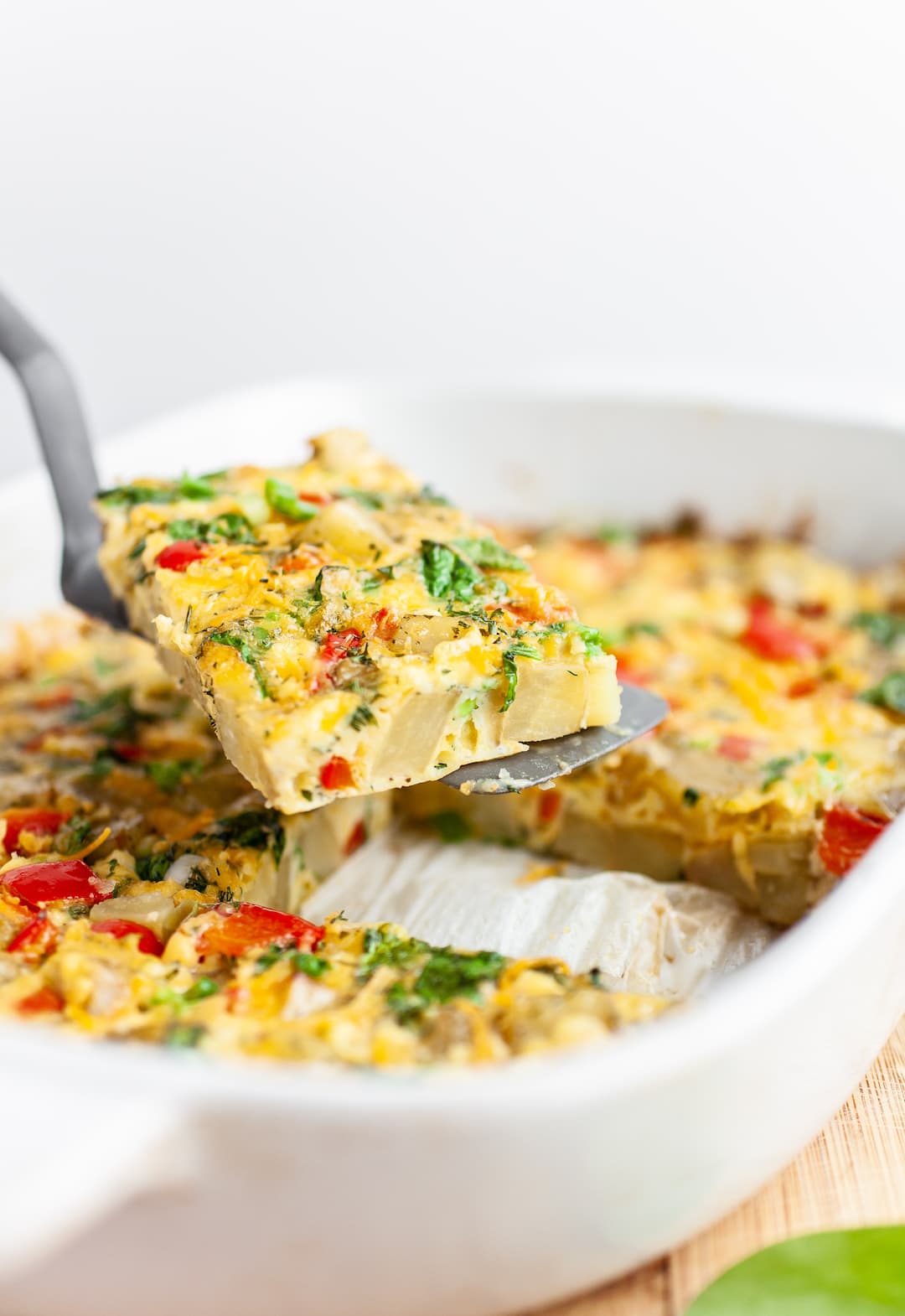
Roasting the diced potatoes first gives them crisp edges and prevents the base from becoming soft after the egg mixture is added. Every serving combines browned potatoes with the baked eggs above.
Vegetables Balance The Richness
Bell peppers, spinach, green onions, and fresh dill distribute flavor throughout the casserole.
Instead of relying on cheese alone, the vegetables introduce sweetness, freshness, and color while keeping each slice substantial enough for breakfast, brunch, or lunch.
Dairy-Free Cheese Adds The Final Layer
A small amount of dairy-free cheese completes the casserole.
The cheese melts into the eggs while contributing familiar texture without overwhelming the vegetables or herbs. Even modest amounts create enough richness for every serving.
Made Ahead, Baked When Needed
Breakfast casseroles work well because preparation happens in advance.
The potatoes can be roasted and the egg mixture assembled before refrigeration. Baking the casserole the next morning delivers a hot breakfast with little preparation, making the dish practical for holidays, weekend brunches, and family breakfasts.
Leave a Reply