


A fruit bowl seems like the obvious place for bananas, yet putting them beside apples, pears, avocados, and other ripening fruit can shorten the window before brown spots take over. The issue comes from ethylene, a natural gas involved in fruit ripening.
Bananas produce ethylene and respond to it, while several fruits around them release the same gas. A crowded bowl can expose the bananas to more ethylene, pushing the bunch from yellow to overripe before you have time to eat it.
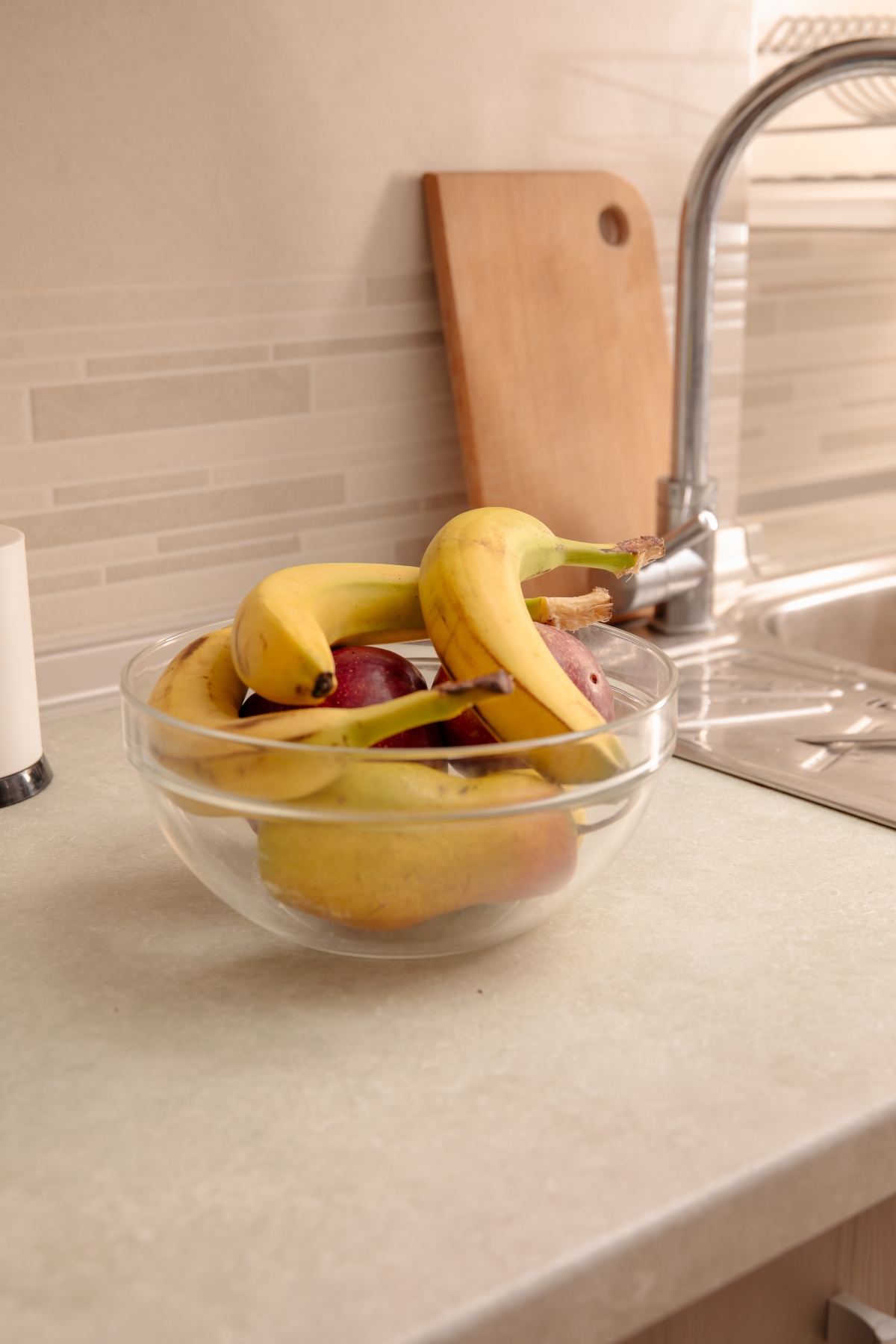
Move Bananas Away From the Fruit Bowl
Keep bananas on the counter, but give them a spot away from other ripening produce. They do not need a special container, and unripe bananas can remain at room temperature while their peel changes from green to yellow.
Separation also works in the other direction. A bunch of bananas can expose nearby ethylene-sensitive produce to more of the gas, so removing the bananas can help prevent several items in the bowl from reaching peak ripeness at the same time.
Wrap the Crown to Slow Ripening
Another storage method involves wrapping foil around the crown where the banana stems meet. The idea is to limit ethylene movement around the stem area rather than leaving the entire crown exposed.
Wrap the crown after bringing the bunch home and keep the bananas away from other fruit. This step will not stop ripening, so expect the peel to develop brown spots as the bananas mature.
Refrigerate Bananas Once They Reach the Color You Want
Once bananas have reached the preferred ripeness, refrigeration can buy more time by slowing the processes involved in ripening. The peel may turn brown or black in the refrigerator even while the fruit inside remains usable.
That makes storage a two-stage process rather than leaving the bunch in the fruit bowl until it goes soft. Keep green bananas at room temperature away from other fruit, then use the refrigerator once they have reached the ripeness you want.
Leave a Reply