


Classic blondies depend on butter for their rich texture and chewy center. As home baking shifted toward ingredient swaps that add flavor as well as function, almond butter began replacing butter in more recipes. Instead of serving only as a spread, it became the ingredient responsible for the dense texture, golden crust, and rich bite people expect from a good blondie.
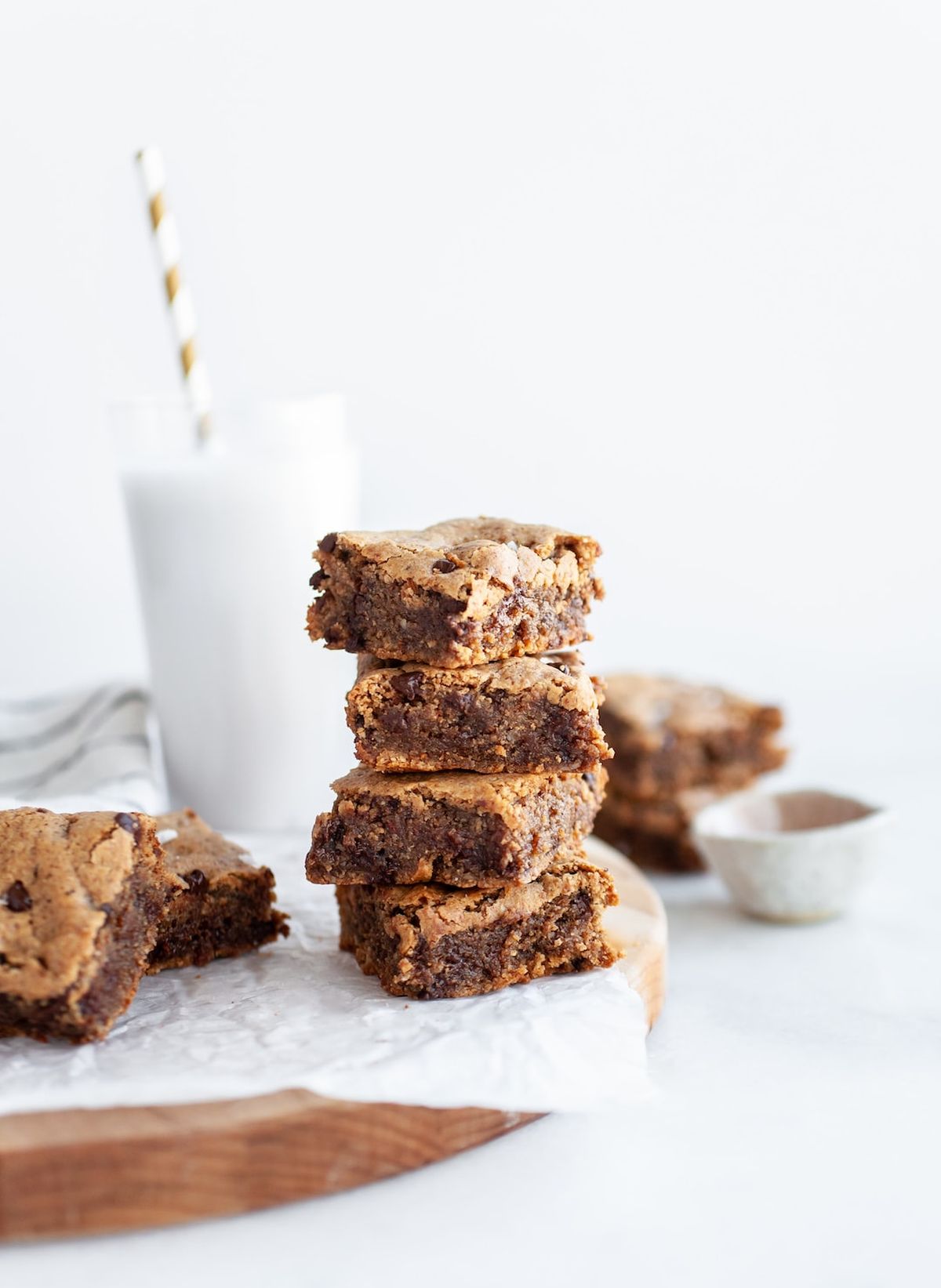
Paired with almond flour and a small amount of tapioca starch, almond butter creates dessert bars with crisp edges and soft centers while keeping the ingredient list surprisingly short. The combination has become a favorite among home bakers looking for texture first rather than complicated substitutions.
Almond Butter Creates Richness Without Butter
Butter contributes fat, moisture, and flavor.
Almond butter performs the same structural role while introducing roasted nut flavor that blends into the batter. Natural oils distribute throughout the mixture, creating blondies that remain soft after cooling instead of becoming dry or crumbly.
The result feels closer to a traditional blondie than many expect from a butter-free recipe.
Almond Flour Keeps The Center Dense
Texture defines blondies.
Almond flour contains natural oils that create a moist crumb instead of the lighter texture associated with wheat flour. Rather than rising into a cake, the batter stays compact, producing the dense interior blondie fans look for.
That richness also allows smaller portions to feel more satisfying.
Tapioca Starch Adds Chew
Dense does not always mean chewy.
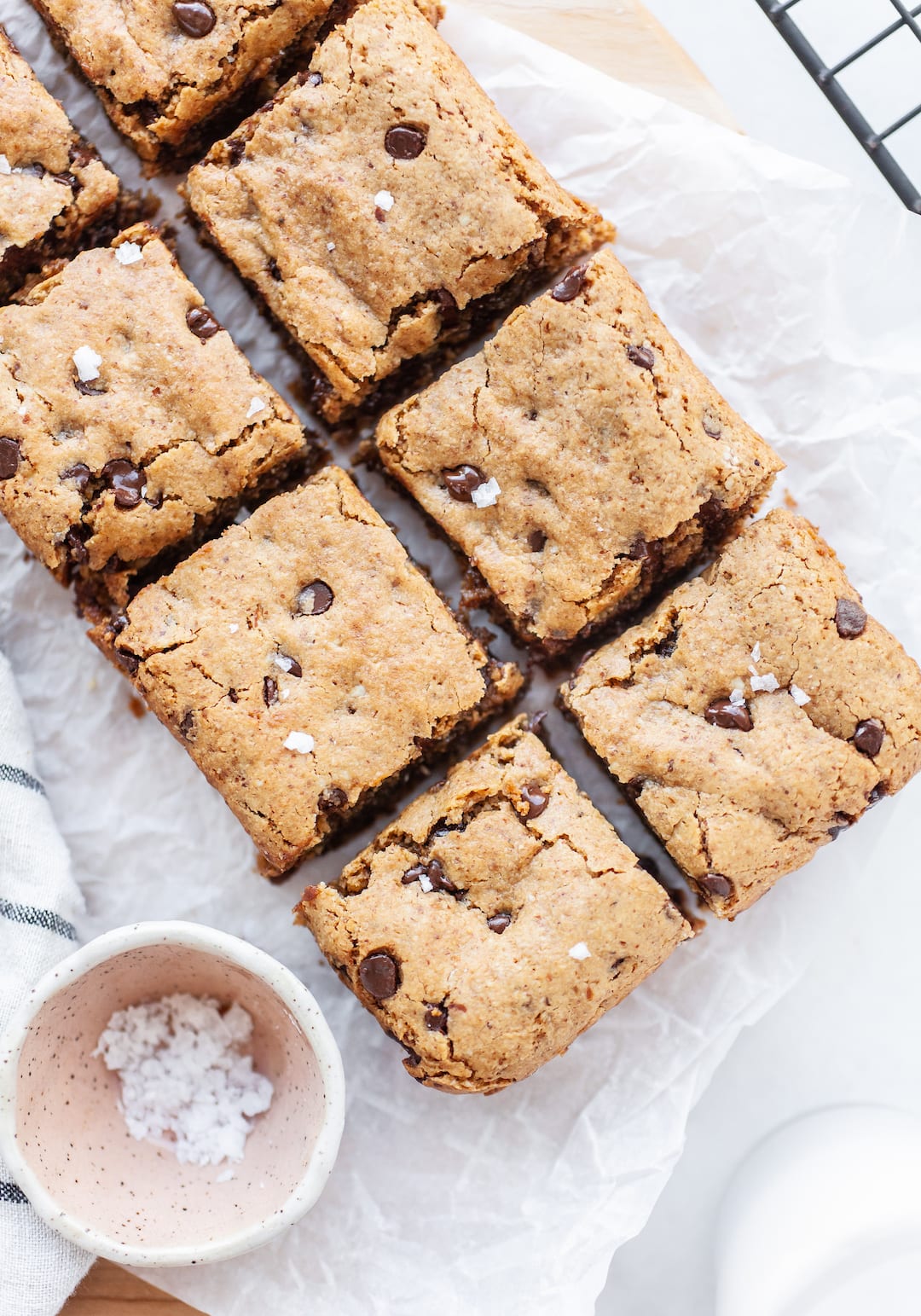
Tapioca starch introduces elasticity that prevents almond flour from becoming too fragile. During baking, it helps bind the ingredients together while producing the slight resistance that separates blondies from shortbread or cake.
Even a small amount changes the finished texture.
Coconut Sugar Brings Caramel Flavor
Sweeteners influence both flavor and appearance.
Coconut sugar develops caramel notes that pair with almonds while helping the surface brown during baking. Those deeper flavors resemble the taste brown sugar contributes in traditional blondies without overwhelming the rest of the ingredients.
Golden edges become part of the finished dessert.
Chocolate Chips Create Contrast
Blondies contain less chocolate than brownies, but chocolate still plays an important role.
Dark chocolate chips soften into pockets throughout the bars, balancing the sweet almond base with slight bitterness. Every square delivers a different combination of creamy blondie and melted chocolate.
The contrast makes the bars feel richer without turning them into brownies.
Short Baking Protects The Texture
Timing determines whether blondies stay fudgy.
Removing the pan once the center has set allows the bars to finish firming as they cool. Longer baking drives out moisture and shifts the texture toward cake, while shorter baking preserves the dense center that defines a blondie.
Cooling before slicing also helps the bars hold clean edges.
Fewer Ingredients Continue Driving The Trend
Many modern desserts depend on long ingredient lists and specialty replacements.
Almond butter blondies move in the opposite direction. Almond butter, almond flour, tapioca starch, coconut sugar, and a handful of pantry staples produce rich dessert bars with the texture people expect from classic blondies.
That balance of simplicity, flavor, and texture explains why almond butter has started replacing butter in more homemade blondie recipes.
Leave a Reply