

Rhubarb is a versatile vegetable known for its sour and tangy flavor. This citrusy, spring vegetable is often enjoyed raw or cooked with sugar or other sweeteners like honey or maple syrup to balance the tartness. From desserts and jams to savory recipes, rhubarb will be a unique addition to your kitchen.
What is Rhubarb?
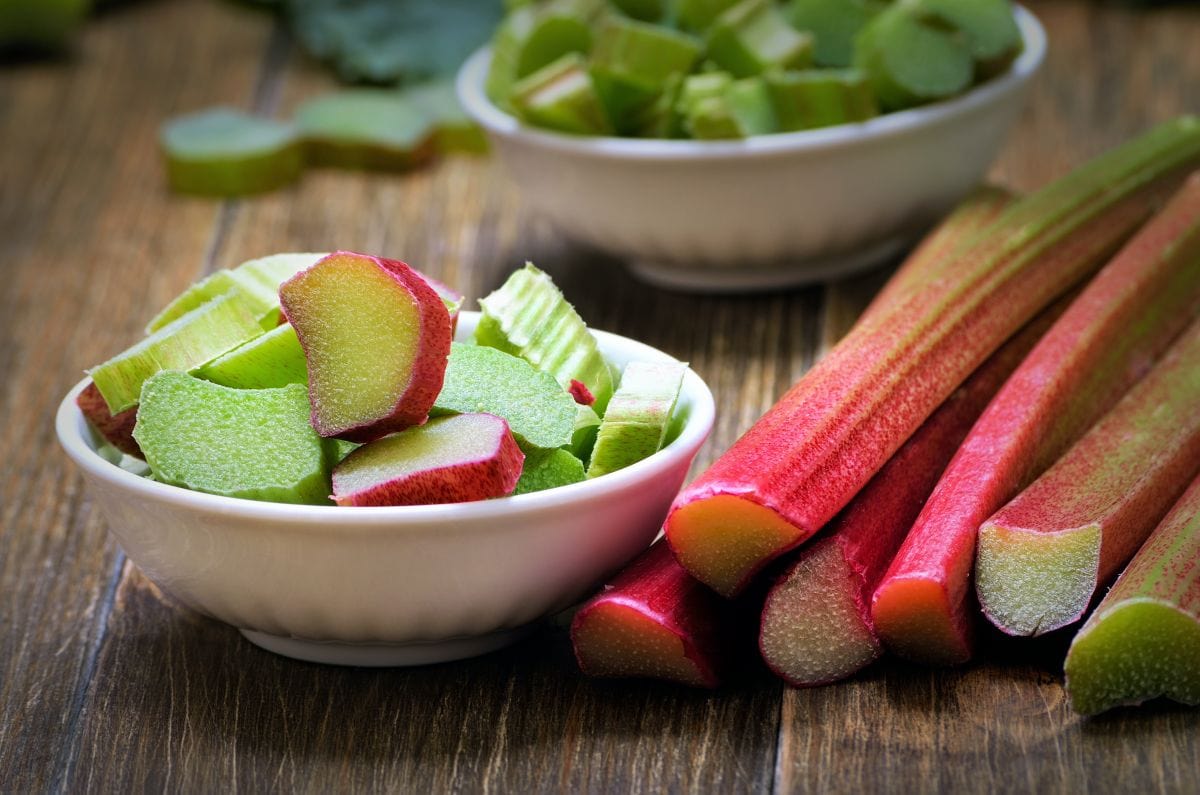
Rhubarb is a long red vegetable that looks a little bit like celery. Although it looks like celery, rhubarb is most closely related to buckwheat and is known for its tart taste, which mellows when baked. These mouth-puckering stalks come into season in spring and are available through early June.
Nutritional Value of Rhubarb
Rhubarb is a nutrient-rich, low-calorie vegetable. Not only is rhubarb high in fiber and antioxidants, but it is also a good source of vitamin K and other minerals like calcium and potassium.
Rhubarb Potential Health Benefits
- Improves bone health
- Promotes blood circulation
- Lowers cholesterol
- Aids in digestion
Is Rhubarb Poisonous?
Rhubarb leaves contain oxalic acid, a dangerous toxin that is poisonous to humans and animals, which is why only the stalks or stems should be eaten. While most stores remove the leaves before preparing rhubarb for sale, some farmer’s markets may sell rhubarb with the leaves and roots attached. Remove them entirely before preparing.
5 Ways to Prepare Rhubarb
1. Baked Goods
Rhubarb is most well-known for its use in baked goods. Because of its tart flavor, rhubarb goes well in any type of baked good which tastes good when made with lemon. Examples include tarts, pies, and ice cream.
2. With Meat
Similar to lemon, rhubarb makes a great flavor addition to many meat dishes. It can be used as a flavor agent in a glaze or marinade or baked with tougher cuts of meat like pork.
3. Salsa
Rhubarb makes an excellent salsa when mixed with onion and tomatoes. Most people enjoy the taste on tacos, or even just as a dip served with chips.
4. Syrup
Rhubarb can be boiled down to make a syrup. As a syrup, rhubarb goes well in cocktails or tastes delicious on pancakes.
5. Jam
Rhubarb is a bit tough but lends itself well to being made into a jam or jelly. Once preserved, rhubarb jam can be used to top bread, pudding, and crepes.
How to Store Rhubarb
Rhubarb only stays fresh for about a week once harvested and can be refrigerated for up to two weeks and frozen for up to a year. Always remove the toxic leaves and ensure the stalks are dry before storing.
To refrigerate, wrap the rhubarb stalks in a damp paper towel. Place them in a plastic bag and store them in a crisper drawer in the refrigerator.
For freezing rhubarb, first wash and cut the stalks into 1-inch pieces and blanch them in boiling water for 1 or 2 minutes. Next, cool them quickly in ice water, and then drain and pat them dry. Spread the pieces on a baking sheet and freeze before transferring them to an airtight freezer bag or container.
Stalks purchased from your local farmers market or grocery store can be stored unwashed in the fridge. However, those making rhubarb preserves should use it as quickly as possible for the best results. Once rhubarb starts to turn brown or becomes mushy, it has gone bad and should be disposed of.
Leave a Reply