

The snack aisle is feeling bold lately. Crackers claim they’ll “support digestion.” Granola bars brag about live cultures. Even fruit snacks now claim to benefit your microbiome. Probiotics have officially left the fridge and started showing up everywhere.
And honestly, the idea is appealing. Shelf-stable probiotics sound tailor-made for real life: backpacks, desk drawers, diaper bags, glove compartments.
Still, the skepticism is fair. Probiotics are living organisms. If they’ve been sitting on a shelf for months, riding through warm warehouses and delivery trucks, are they doing anything by the time you tear the package open?
Some products are thoughtfully formulated. Others are mostly marketing dressed up as nutrition. If you care about gut health, the difference matters.
How Probiotics Support Gut Health
Probiotics are live microorganisms that, when consumed in adequate amounts, confer a health benefit, a standard reflected in the NIH Office of Dietary Supplements’ probiotic fact sheet.
“Probiotics” isn’t one thing. It’s a whole category of strains, and they don’t all behave the same way. Some have research behind them for certain types of diarrhea, especially after antibiotics. Others have been studied for specific digestive symptoms. Plenty have little meaningful evidence at all. So if a package says “contains probiotics” and stops there, you’re missing the information that matters most.
This is why strain names are a big deal. Lactobacillus rhamnosus GG isn’t interchangeable with every other Lactobacillus strain. The same goes for Bifidobacterium strains. Studies tend to be picky on purpose: one strain, one dose, one outcome. When a label won’t tell you what strains it contains, it’s hard to know what you’re buying beyond a trendy word.
Dose matters too. Probiotics are measured in colony-forming units, or CFUs. A clear CFU amount paired with specific strains tells you more than any “advanced blend” claim ever will.
And while probiotics can be helpful, they’re not operating in a vacuum. The gut bacteria you already have rely heavily on fiber. If your diet is low on fruits, vegetables, beans, whole grains, nuts, and seeds, adding probiotics won’t do much heavy lifting.
Can Probiotics Survive Without Refrigeration?
For years, probiotics basically lived in the refrigerated section. Yogurt, kefir, and other fermented foods contain cultures that can be sensitive to heat and moisture. So when probiotics show up in a pantry snack, it’s normal to wonder if they’re still alive.
The answer depends on the strain and the formulation. Some probiotic strains are naturally more stable. Spore-forming strains, for example, are built to handle tougher environments. Manufacturers can also protect probiotics through techniques like encapsulation and moisture-resistant packaging.
The biggest sticking point is whether the product guarantees potency through the end of shelf life. A CFU count printed at the time of manufacturing doesn’t tell you how many organisms are alive when you eat it months later. Shipping heat, storage conditions, humidity, and packaging all make a difference.
Shelf-stable doesn’t equal useless. It does mean you should expect more transparency. Brands that have done the work tend to list strains clearly and guarantee CFUs through expiration.
What to Look for in a Shelf-Stable Probiotic Snack
If you’re going to buy probiotic snacks, take a minute to actually read the label.
Look for specific strains. “Lactobacillus” alone is like saying “fruit” and calling it a day. A full strain name suggests the product is built around organisms that have actually been studied.
Check the CFU count and what it’s measuring. The best products guarantee a CFU amount through the expiration date, not just at production.
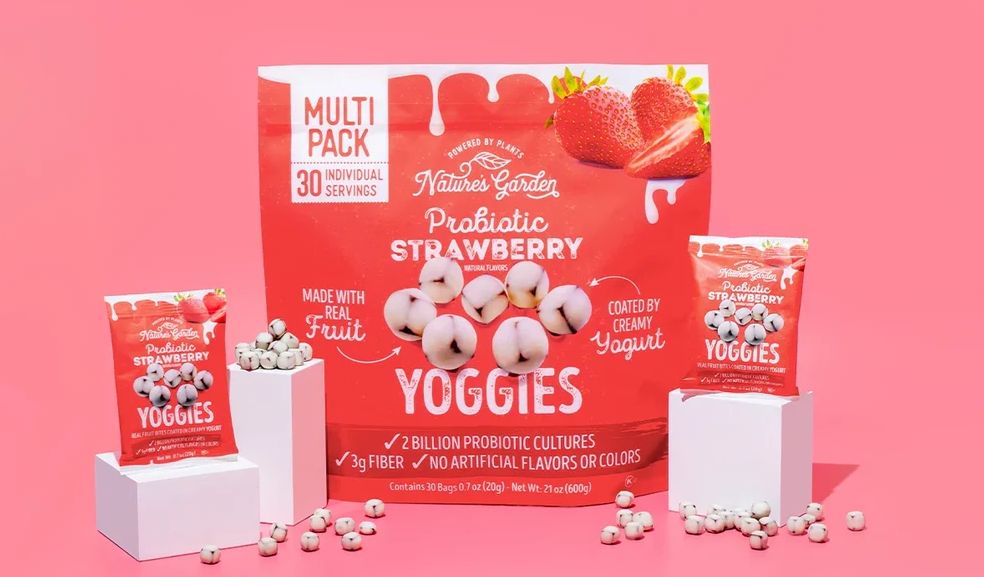
Pay attention to packaging. Individually sealed servings and moisture-resistant materials help protect viability, especially if the snack is meant to live in a pantry or lunchbox. That’s one reason shelf-stable options like probiotic yogurt snacks can make sense in day-to-day routines.
Don’t ignore the rest of the ingredient list. Probiotics don’t magically redeem a snack that’s basically refined starch and sugar. You still want fiber, you still want reasonable added sugar, and you want the probiotic claim to feel like a nice extra, not the main selling point.
Do Shelf-Stable Probiotics Survive Digestion?
Let’s say the probiotics survive the pantry. They still have to make it through your stomach. Gastric acid is tough, and a lot of microbes don’t handle it well.
Again, strain and formulation matter. Some probiotics are more acid-resistant by nature. Others use protective delivery systems, like microencapsulation, to increase survival rates as they move into the intestines.
It also helps to keep expectations realistic. Probiotics don’t need to permanently colonize your gut to have an effect. Many work temporarily as they pass through. But that benefit depends on strain and dose, which is why vague labels are such a problem.
Gut Health Is Bigger Than a Single Snack
It’s easy to get caught up in the search for one “fix.” Digestion doesn’t work that way. The microbiome responds to what you do consistently.
Fiber is one of the most reliable gut-health supports we have. Fruits, vegetables, beans, whole grains, nuts, and seeds provide the fermentable carbohydrates that beneficial bacteria feed on. When fiber is missing, probiotics have less to work with.

Variety counts. Different plants nourish different microbes, and that diversity shapes a more resilient gut. In real life, that might look like a meal layered with fiber-rich produce and cultured ingredients, or something simple like a creamy healthy gut vanilla chai smoothie that pairs probiotics with prebiotic fiber in one satisfying glass.
Helpful Addition or Just Hype?
Shelf-stable probiotic snacks can support gut health. The key is choosing products that list specific strains, guarantee potency through expiration, and fit into an overall eating pattern that’s already doing the basics well.
They’re convenient, and convenience matters. Just don’t let the word “probiotic” do all the persuasion. Look for strain transparency, a meaningful CFU guarantee, smart packaging, and an ingredient list that makes sense. If those pieces are there, a shelf-stable probiotic snack can be a helpful addition without pretending to be a miracle.
Leave a Reply